Skip to product information
1 of 2

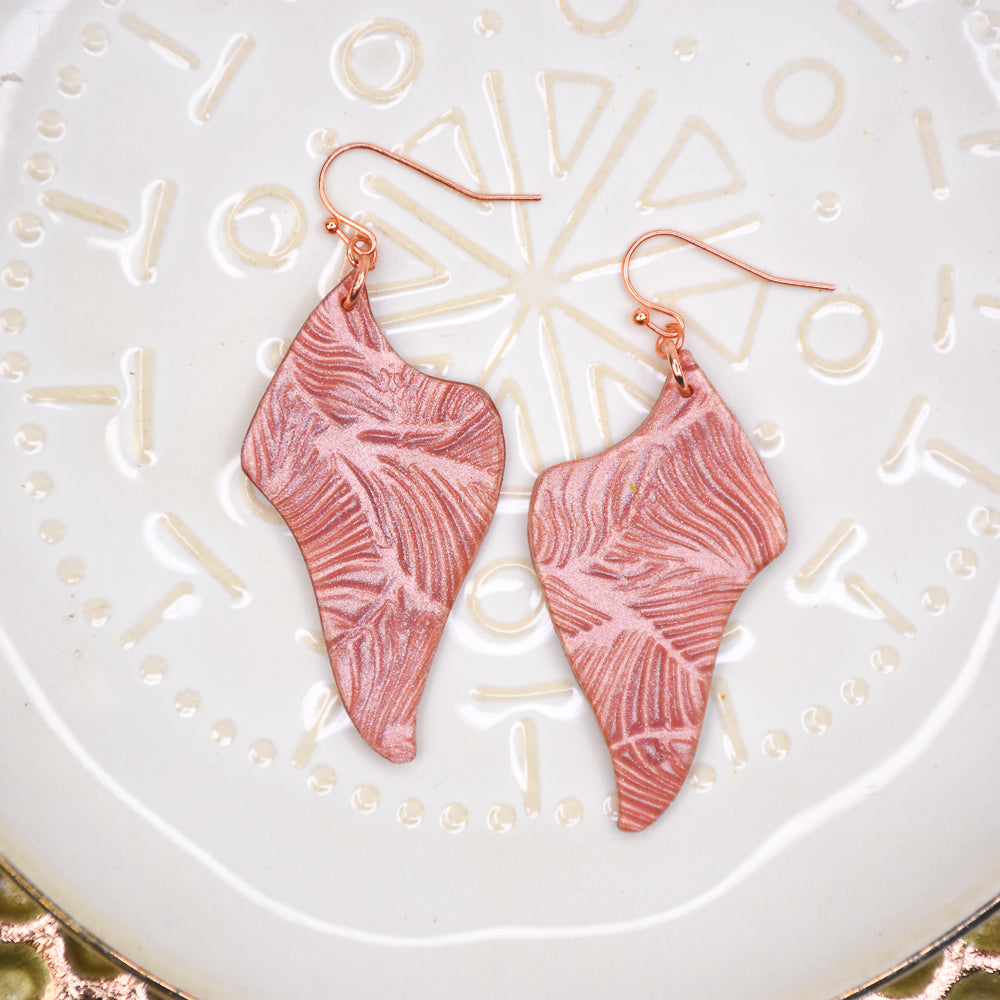
Sculpey Premo™ Rose Gold Mica Shift Earrings

Sculpey Premo™ Rose Gold Mica Shift Earrings

Designed by syndee holt
Read More
Experience the magic of “Mica Shift” with this simple project! I’ve done mica shift for several years, but THIS Rose Gold metallic clay is just exceptional for this technique. All my extra pieces have been snagged by my neighbors when they saw my workshop doors open. TIME TO COMPLETION: 1 hour to make/bake
Read Less
ADDITIONAL SUPPLIES
  • ·         Small spray bottle of water
  • ·         Smooth tile to secure the clay when shaving
  • ·         Several sheets of plain paper
  • ·         Your selected stamp – mine are from Amazon – Leather Hole Punch Tool, 39 pieces 
  • ·         Findings: I’m using Copper tone 6 mm jumprings (2) and earwires (2).  Rose Gold findings work well with this clay too!
  • ·         Clean toothbrush (optional)
  • ·         PATIENCE!  Take your time cutting away at the stamped surface!
View full details
Project Instructions

Step 1

Getting Started:

Please make sure your work area is covered and you are not working on an unprotected surface. We recommend working on the Sculpey® Oven-Safe Work Mat, wax paper, metal baking sheet, or disposable foil. Uncured clay may damage unprotected furniture or finished surfaces. Be sure to cover your crafting area appropriately.

Start with clean hands, unwrap and knead clay until soft and smooth, or condition by running clay though a Pasta Machine. We recommend using a designated machine for clay purposes only. When working with multiple colors, clean hands with soap and water or baby wipes (we have found that baby wipes work best) before switching colors. Shape clay, pressing pieces firmly together. Wash hands after use.

Baking (also called Curing):

Begin by preheating oven to 275 °F (130 °C). After you are done creating; for best results bake/cure clay on an oven-proof surface such metal, aluminum foil, an index card or the Sculpey® Clay Mat at 275°F (130 °C) for 30 minutes per 1/4" (6 mm) thickness according to package directions. Oven safe glass or ceramic surfaces are also acceptable for baking/curing; however please note that the baking/curing times
may take longer as the glass or ceramic surfaces take longer to heat up. For
best baking results, use an oven thermometer. DO NOT USE MICROWAVE OVEN. DO NOT EXCEED THE ABOVE TEMPERATURE OR RECOMMENDED BAKING TIME.

Step 2

I like to lightly clean the mold pattern I’ve selected to help remove any dust or small bits of clay from prior use.

Step 3

Prepare your sheet of conditioned clay with a clay roller or clay dedicated pasta machine (I’m using #2 on my clay machine).

Spray the mold liberally with water and place the mold into a folded sheet of plain paper.

Place the prepared clay onto the selected mold and fold the paper down.

I work on a concrete floor, so I put this sheet of paper on the floor with the clay side up within the folded paper and I step on the folded paper.  I turn the sheet and step
on it from all 4 sides. 

Alternately you can put a firm item on top of the folded paper on your worktable and press firmly.

Step 4

As I lift the paper, the clay releases from the mold and stays on the paper.

Gently remove the clay from the paper and place on your smooth work surface or large tile like I’m using.

Step 5

Once you have the clay anchored to the smooth tile, use a soft cloth or tissue to gently daub the excess water from the clay.

Trim to the edges of the pattern you choose. (NOTE: I’m leaving that gorgeous little patch of the neighboring stamp so we can see what it looks like when I trim the pattern!)

Step 6

Grasp each end of your blade and gently make a slight curve in the blade to begin shaving the top surfaces of the pattern off. I don’t try to shave too large an area all at once.

Remove the shavings to another sheet of paper and make sure your blade is clean of shavings.  (They are pesky lil things!)

Step 7

Here is a shot of my sheet about halfway through the shave process. It is amazing how the pattern remains.(Those shavings on the side? I often use them as well laid on another color clay surface


Step 8

Once the sheet is shaved, gently roll the surface with the clay roller to help ensure that the surface is completely flat.

Step 9

Use your selected cutter(s) to cut out your earring pieces.

Use your needle tool to add the hole for assembly or drill after baking/curing as I do.

Step 10

Here are all my pieces ready to transfer to my baking tray. 

Bake/cure according to the directions in Step 1 above


Step 11

Once the clay has baked/cured and cooled gently rub the pieces against the 800 grit sandpaper.


You may need to start with a slightly lower grit if there is still some surface texture on the pieces.  You can dampen the sandpaper if you have to do a lot of sanding to help capture the dust. 

Don’t forget to slightly soften the back edges of the pieces as well.

Step 12

Once the pieces are sanded a bit, use your buffing tool to increase the shimmer of the surface. 

I often use my jeans for the final gloss!

Step 13

As I mentioned in Step 9 above, I like to add my assembly holes after baking/curing with a jewelry hand tool and small drill bit. I like to use a small piece of wood and a small sheet of graphed index card to help me position my hole correctly


Step 14

Here is the layout for this simple assembly.  I had a hard time deciding to use either these copper-toned findings or silver-toned findings to highlight the gorgeous glimmer of the pattern.

Step 15

Here is a look at the finished earrings.
Simple can be FABULOUS!