
Skip to product information
1 of 1

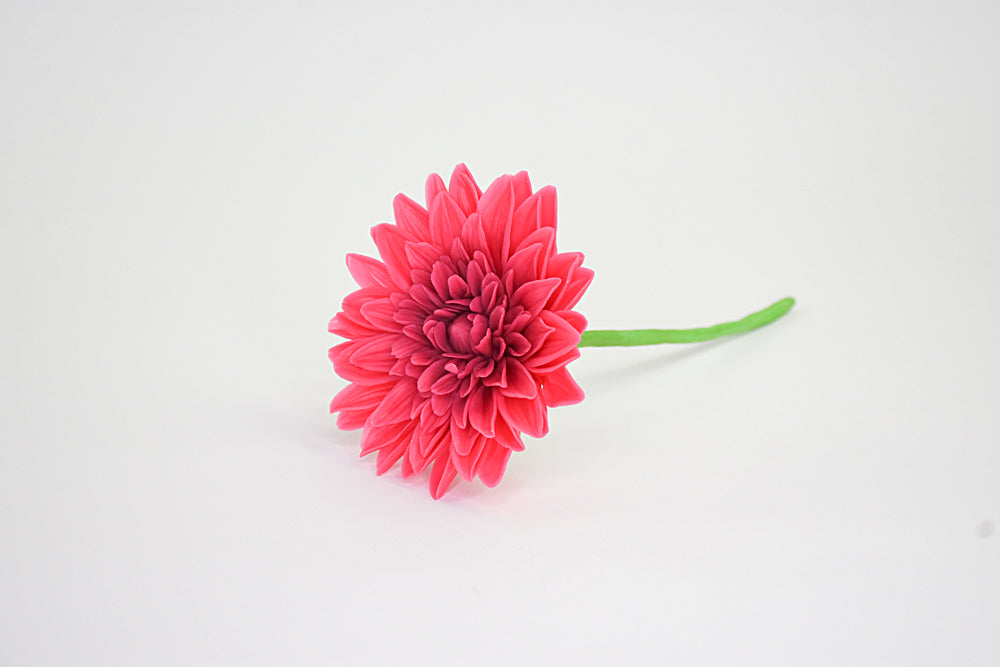
Sculpey Air-Dry™ Porcelain Sculpted Dahlia

Sculpey Air-Dry™ Porcelain Sculpted Dahlia

Designed by Heather Robertson
Read More
Enhance your home or office with this handmade floral masterpiece and watch the compliments roll in. TIME TO COMPLETION: 2-4 days depending on the relative temperature/humidity in your work area.
Read Less
ADDITIONAL SUPPLIES
  • Dahlia petal cutters and petal veiners
  • Paper wrapped florist wire (#18 or 20)
  • Pliers and wire cutters
  • Green florist tape
  • White PVA/school glue
  • Flat palette knife
  • Needle tool
  • Craft knife
  • Acrylic ink in magenta and sap green – tube watercolour or oil paints can also be used
  • Disposable gloves
  • Plastic sandwich wrap
  • Chalk pastels, brightly coloured eye shadows, or Pan Pastels
  • Paint Brushes
  • Cornflower pounce for dusting (cornflour in a sock or piece of cotton fabric works well)
  • Pointed wooden skewer
  • Plastic document wallet with the sides cut open
 

View full details
Project Instructions

Step 1

Getting Started with Sculpey Air-Dry™ Porcelain:

  • Plan to work with a nonporous, smooth and well-cleaned surface.
  • Try to use only the amount of clay you need at a certain time, and leave the rest sealed and stored away.
  • Knead your Sculpey Air-Dry™ Porcelain Clay before you begin shaping it for your creations.
  • Use your hands, different crafting tools and various multimedia materials to shape your clay into the design you desire. You can also incorporate mixed media elements and unique patterns and textures with air-dry porcelain clay.
  • Stand or lay your Sculpey Air-Dry™ Porcelain Clay projects on a nonporous surface with a smooth, clean finish in an area with low humidity. Ensure the clay remains undisturbed and untouched for approximately 24 hours to make sure it completely hardens.

Step 2

Adding colour to your clay – Pink Dahlia

Wearing disposable gloves, add some magenta acrylic ink, oil paint or watercolour paint to 1/3 pack of Air-Dry Porcelain clay. Roll the clay flat and spread the ink or paint around with your fingers. Fold the clay in and over the ink or paint, and mix until the colour is thoroughly mixed. NOTE: As the clay is translucent, the colour will be a little darker once dry.

Step 3

Wrap clay
Once your colored clay has been mixed, wrap it in some plastic wrap to stop it from drying out.

Only remove the amount of clay that you will need for each step, otherwise it will dry, and you will not be able to use it.

Step 4

Dahlia centre bud –   
Add a marble sized ball of pink Air-Dry Porcelain clay to the end of a #18 or #20 piece of florist wire, using a drop of PVA glue to the secure it in place.  Shape this into a bud shaped oval and add some texture lines to the bud using a craft knife – to replicate lots of tiny, closed petals.

NOTE: You can wrap the wire into a coil to create a stand and make it easier to hold and work with.

Step 5

Creating the inner petals - part 1

a.  Measure out 12-16 balls of clay, about the size of a pea.

b. Roll these into a teardrop shape and flatten with a flat palette knife or piece of card to create small petals.

c. You can also sandwich these between a plastic document wallet, which will also keep them from drying out too much.

Step 6

Creating the inner petals - part 2

a. Pinch and roll the base of each petal between your fingers (the narrower end of the flat teardrop)

b. Add a little PVA glue to the circumference of the bud and secure each petal in place by adding one petal at a time on opposite sides. Allowing the petals to overlap.

c. Allow the glue to dry.

Step 7

Cutting small petals – layer 1

a.  We now need to add two layers of small petals, and this will be done in two stages so that the clay doesn’t dry out while working on them. Dust some cornflour onto the inside of a plastic document wallet and roll out a thin sheet of pink clay to about a 2mm thickness (this is a number 3 setting on my pasta machine) Roll this inside the document wallet.

b.  Using a small Dahlia petal cutter (approx. 12mm x 30mm) cut out 12 small petals.

c.  Keep the petals covered by the plastic document wallet to keep them from drying out too much.

d.  Press each petal between a Dahlia Petal Texture Veiner.

Step 8

Shaping small petals – layer 1

a.  Roll the base of each petal (the narrow end) between your fingers, using a wooden skewer to help create a tube.

b.  Once all the petals have been shaped, add a small amount of PVA glue to the rolled edge of each petal.

Step 9

Adding small petals-   
Secure each petal to the bud by adding one petal at a time on opposite sides.

Step 10

Adding small petals – Layer 2  
Repeat steps 7-8

Secure each petal to the bud by adding one petal at a time on opposite sides, in between the first layer of small petals.


Leave this to dry overnight.

Step 11

Adding medium petals – layer 1    


We now need to add 1 layer of medium sized petals.

    
Using a medium Dahlia petal cutter (approx.15mm x 40mm) cut out 12-13 medium sized petals, and attach to the outside of the small petals, following steps above.

 
Leave this to dry facedown while you create the first layer of large petals.

Step 12

Adding Large petals – Layer 1  

 
We now need to add the first layer of large sized petals.

  
Using a large Dahlia petal cutter (approx. 20mm x 50mm) cut out 12-13 large sized petals, and attach to the outside of the medium petals as we previously added petals.

  
Remove the stem wire and create a nest from rolled up paper towel or toilet tissue. Place the flower in the nest and leave to dry. The nest will support the petals and help to hold the flower in shape as they dry.

Step 13

Adding Large petals – Layers 2 and 3

    
Once the 1st layer of large petals has dried, add another 2 layers of petals.

Layer 2: cut, vein and shape 10-12 large petals and glue in between the petals on layer 1.

Layer 3: cut, vein and shape 12 large petals and glue in between the petals on layer
2. The back of your flower will now appear to be quite flat. Rest your Dahlia
in a nest of paper towel or toilet tissue and leave to dry overnight.

Step 14

Adding colour to your clay – green calyx and stem

   
Wearing disposable gloves, add some sap green acrylic ink, oil paint or watercolor paint to 1/6 pack of Air-Dry Porcelain Clay.

   
Roll the clay flat and spread the ink or paint around with your gloved fingers.

  
Fold the clay in and over the ink or paint and mix until the colour is thoroughly mixed.

As the clay is translucent, the colour will be darker once dry.

Step 15

Reattaching wire stem-  


Straighten the wire stem and reattach this into the back of the Dahlia by using a some PVA glue and green Air-Dry Porcelain Clay to secure.

     
Rest face down on your nest of paper towel or toilet tissue while you cut the clay for the calyx (the green leafy part at the base of the petals).

Step 16

Calyx (green leafy part at petal base)

     
Roll out some green Air-Dry Porcelain Clay and cut this into 12 small petals. Lengthen these a little by stretching the clay and add texture by using the small petal veiner.  Secure to the base of the flower, extending down a little onto the stem, using some PVA glue. Allow to dry.

Step 17

Strengthen the stem

     
Using some green florist tape, add two more #18 or #20 pieces of florist wire to the original stem wire. This will help to support the weight of the flower. Stretch the florist tape to activate the tape adhesive, and starting at the calyx, wrap the tape up and down the stem a few times to hold the wires in place. Holding the tape at
slight angle with make it easier to wrap up and down the wires.

     
Using some wire cutters, cut the stem to the desired length. You can leave the stem like this or move onto the next step where we will cover the stem in clay.

Step 18

Adding clay to the stem

    
Roll out a long snake of green clay, a little longer than the flower stem.

  
Flatten this with your clay roller or fingers. You don’t want this to be too thick.

 
Cover your wire in PVA glue. Press the clay around the wire,
and roll between your fingers, stretching the clay down the stem so that it is
not too thick.

NOTE:  
Using a little water on your fingers can help smooth the seams.

      
Smooth and blend the stem clay into the calyx.

     
Rest your Dahlia facedown, in your nest of paper towel or toilet tissue and leave to dry overnight.

Step 19

Adding colour for depth

     
Add a little dimension and depth to your Dahlia, by using chalk pastels or eye shadow for a subtle effect, and acrylic paints or inks for a stronger effect.

     
For the petals I have dusted some dark purple eyeshadow in the centre of the Dahlia using a soft brush.

   
For the stem I have used a little sap green acrylic ink to add more depth of colour to the stem and calyx.

Step 20

 
Display your completed dahlia flower in a glass jar or tall vase covered in polymer clay.